
AI Scams in 2026: 15 New Tricks Fraudsters Are Using to Steal Your Money (And How to Stay Safe)
AI Scams in 2026 are becoming one of the biggest cybersecurity threats facing individuals and businesses worldwide. While artificial intelligence is transforming healthcare, education, finance, entertainment, customer service, and many other industries for the better, cybercriminals are also using the technology to create smarter and more convincing fraud. Understanding how these scams work is essential if you want to protect your money, identity, and personal information.
Cybersecurity experts have warned that artificial intelligence is making online fraud faster, cheaper, and much harder to detect. Unlike traditional scams that often contained poor grammar or suspicious formatting, AI-generated scams can appear almost indistinguishable from genuine communications.
Whether you live in the United States, the United Kingdom, Canada, Australia, Kenya, or anywhere else in the world, understanding how these scams work is becoming an essential digital survival skill.
In this comprehensive guide, you’ll learn:
- What AI scams are and why they are increasing
- The 15 most dangerous AI scams in 2026
- Real-life examples of AI-powered fraud
- The warning signs scammers hope you’ll ignore
- What to do if you’ve already been targeted
- Practical tips to protect your money, identity, and personal information
If you use email, social media, online banking, shopping apps, or messaging platforms, this guide could help you avoid becoming the next victim.
Table of Contents
- What Are AI Scams?
- Why AI Scams Are Exploding in 2026
- AI Scam Statistics You Should Know
- How Criminals Use Artificial Intelligence
- The 15 Most Dangerous AI Scams in 2026
- Real-Life AI Scam Cases
- How to Protect Yourself
- What to Do If You’ve Been Scammed
- Frequently Asked Questions
- Final Thoughts
What Are AI Scams in 2026?
AI scams are fraudulent schemes in which criminals use artificial intelligence to deceive people into revealing sensitive information, transferring money, downloading malicious software, or granting unauthorized access to their accounts.
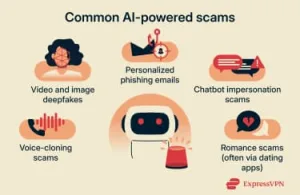
Unlike traditional online scams, AI-powered fraud relies on advanced technologies such as:
- Voice cloning
- Deepfake videos
- AI-generated images
- AI-written emails
- Chatbots that mimic human conversations
- Automated phishing campaigns
- Fake customer service agents
- Synthetic identities
These technologies make scams more convincing by removing many of the warning signs people once relied on to identify fraud.
For example, imagine receiving a phone call that sounds exactly like your daughter asking for emergency financial help, or watching what appears to be a trusted celebrity promoting an investment opportunity through a realistic video. In many cases, these voices and videos are not real—they are generated using artificial intelligence.
This growing sophistication means that caution alone is no longer enough. Verifying identities and information has become essential.
Why AI Scams in 2026 Are Increasing So Rapidly
Artificial intelligence tools have become more accessible than ever. Many AI applications are inexpensive or even free, allowing almost anyone—including cybercriminals—to generate convincing text, voices, images, and videos within minutes.
Several factors have contributed to the rapid rise of AI scams in 2026:
1. AI Tools Are Widely Available
Powerful AI software is no longer limited to large technology companies. Open-source models and consumer-friendly applications have lowered the barrier to entry, making advanced capabilities available to a much wider audience. While these tools have many legitimate uses, they can also be misused for fraud.
2. People Share More Personal Information Online
Social media profiles often reveal names, birthdays, workplaces, travel plans, hobbies, and family relationships. Criminals can combine this publicly available information with AI to create highly personalized scams that appear genuine.
3. Deepfakes Have Become More Convincing
Only a few years ago, deepfake videos often contained noticeable flaws. Today, improvements in AI have made many fake videos and voice recordings difficult to distinguish from authentic ones, especially when viewed on a smartphone.
4. Cybercrime Has Become a Global Business
Many fraud groups now operate like organized businesses, complete with customer support, marketing tactics, and automated systems. AI allows these groups to scale their operations and target thousands of victims simultaneously.
5. Trust Is Easier to Exploit
People naturally trust familiar voices, recognizable faces, and professional-looking websites. AI enables criminals to imitate all three with remarkable accuracy, making traditional instincts less reliable.
AI Scams in 2026: Statistics You Should Know
Understanding the scale of the problem highlights why awareness is so important.
Key Facts
- AI-assisted phishing campaigns are becoming increasingly common because they can produce convincing, personalized messages in seconds.
- Voice-cloning technology now requires only a short audio sample to generate realistic speech.
- Businesses around the world are reporting more attempts to impersonate executives using AI-generated audio and video.
- Financial institutions have significantly increased investment in AI-powered fraud detection as digital scams continue to evolve.
- Cybersecurity professionals expect AI-driven attacks to become even more sophisticated over the next few years.
Did You Know?
Many people still believe they could easily identify a scam. However, studies suggest that confidence does not always translate into accuracy, especially when fraudsters use AI to imitate trusted people or organizations.
How Criminals Use Artificial Intelligence in AI Scams
Artificial intelligence itself is not dangerous. The risk comes from how it is used.
Here are some of the most common ways scammers exploit AI:
| AI Technology | How Criminals Use It | Potential Impact |
|---|---|---|
| Voice cloning | Impersonating family members or executives | Financial theft |
| Deepfake videos | Creating fake celebrity or executive endorsements | Investment fraud |
| AI chatbots | Pretending to be customer support | Credential theft |
| AI-generated emails | Sending personalized phishing messages | Identity theft |
| AI image generation | Producing fake documents and identities | Account fraud |
| Language models | Writing convincing scam scripts | Social engineering |
The combination of these technologies makes modern scams faster to produce, more convincing, and harder to detect than ever before.
The 15 Most Dangerous AI Scams in 2026
1. Voice Cloning Emergency Scams
Imagine answering your phone late at night and hearing your son’s voice.
He sounds frightened.
He tells you he has been involved in a car accident, lost his wallet, and urgently needs money transferred to a specific account.
Most parents would act immediately.
Unfortunately, this scenario is becoming increasingly common.
Voice cloning software can recreate someone’s voice using only a short recording taken from a social media video, podcast, or voice message. Criminals combine this technology with publicly available personal information to create believable emergencies designed to pressure victims into sending money before they have time to verify the story.

Common Warning Signs
- An urgent request for money.
- Pressure to act immediately.
- Instructions to keep the situation secret.
- Requests to send funds through cryptocurrency, gift cards, or instant payment services.
- Claims that normal communication channels are unavailable.
How to Protect Yourself
- Hang up and call the person back using a number you already know.
- Establish a family “safe word” that only close relatives know.
- Never send money based solely on a phone call or voice message.
- Stay calm. Urgency is one of the scammer’s strongest weapons.
Quick Tip: Even if the voice sounds identical to someone you know, always verify the request through a separate communication channel before taking any action.
2. Deepfake Celebrity Investment Scams
One of the fastest-growing AI scams in 2026 involves deepfake videos featuring well-known public figures.
Scammers use artificial intelligence to create highly realistic videos that appear to show celebrities, business leaders, or financial experts endorsing investment opportunities. These videos are often shared through social media advertisements, messaging apps, or fraudulent news websites.
The promotions typically promise extraordinary returns with little or no risk—claims that should immediately raise suspicion.
Victims are directed to professional-looking websites where they are encouraged to deposit money into fake investment platforms. In some cases, the platforms display fabricated profits to encourage additional deposits before the scammers disappear with the funds.
Red Flags to Watch For
- Guaranteed or unusually high investment returns.
- Claims of “secret” investment methods.
- Pressure to invest immediately to avoid missing out.
- Requests to pay using cryptocurrency only.
- Testimonials that cannot be independently verified.
How to Stay Safe
- Research every investment opportunity thoroughly.
- Verify endorsements through the celebrity’s official channels.
- Check whether the investment company is licensed in your country.
- Be skeptical of any opportunity that promises guaranteed profits.
3. AI Romance Scams
Romance scams have existed for years, but AI scams in 2026 have made them far more convincing and emotionally manipulative.
Instead of spending weeks crafting messages manually, scammers now use AI to generate personalized conversations that sound warm, caring, and authentic. Some even use AI-generated profile photos or deepfake video calls to convince victims they are speaking to a real person.
Once trust has been established, the scammer eventually invents an emergency or investment opportunity and asks for money.

Warning Signs
- They avoid meeting in person.
- They quickly declare love.
- They always have an excuse for needing money.
- Their photos seem almost “too perfect.”
- They discourage you from telling family or friends about the relationship.
How to Protect Yourself
- Reverse-search profile photos.
- Never send money to someone you’ve never met.
- Be cautious if conversations become intensely emotional very quickly.
- Verify identities through multiple methods.
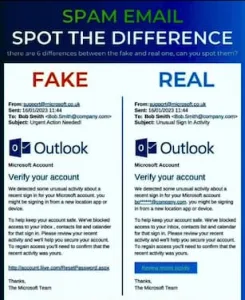
4. AI-Powered Phishing Emails
Traditional phishing emails were often easy to spot because of poor grammar and awkward wording.
Today’s AI-generated phishing emails are different.
Artificial intelligence can create emails that perfectly imitate banks, government agencies, online stores, and even your employer.
These emails often include:
- Your full name
- Your workplace
- Recent purchases
- Correct logos
- Professional formatting
- Personalized messages
This level of personalization makes victims far more likely to click malicious links.
Red Flags
- Unexpected requests to verify your account.
- Links that don’t match the official website.
- Requests for passwords or verification codes.
- Threats that your account will be suspended immediately.
Stay Safe
- Visit websites manually instead of clicking links.
- Enable multi-factor authentication.
- Double-check email addresses carefully.
- Never share one-time passwords.
5. AI Customer Support Impersonation
Need help with your bank?
Scammers know many people search online for customer support phone numbers.
They create fake websites that rank in search engines or advertise on social media.
When victims call, AI-powered chatbots or fake agents answer professionally, asking for:
- Banking details
- Verification codes
- Card numbers
- Passwords
Because the interaction feels genuine, victims often cooperate.
Protection Tips
- Always obtain support numbers from official websites.
- Never share authentication codes.
- Hang up if someone pressures you.
6. Fake Job Offers Generated by AI
Job seekers have become prime targets for AI scams in 2026.
Fraudsters use AI to generate convincing job descriptions, professional emails, interview questions, and employment contracts.
Victims may be asked to:
- Pay training fees.
- Purchase equipment.
- Share passport copies.
- Provide banking information.
The promised job never exists.
Warning Signs
- Salary seems unusually high.
- Immediate hiring without interviews.
- Requests for upfront payments.
- Communication only through messaging apps.
Stay Safe
- Research every employer.
- Verify company websites.
- Never pay for employment.
7. AI Shopping Website Scams
Artificial intelligence now allows criminals to build realistic online stores within hours.
These fake websites feature:
- AI-generated product photos
- Fake customer reviews
- Professional logos
- Secure-looking checkout pages
Prices are often unbelievably low to encourage impulse buying.
After payment:
- Products never arrive.
- Counterfeit goods are shipped.
- Credit card details are stolen.
How to Avoid Them
- Check website reviews.
- Verify the domain age.
- Look for contact information.
- Avoid deals that seem too good to be true.
8. AI Chatbot Fraud
Many legitimate businesses now use AI chatbots.
Scammers have copied this idea.
Victims encounter fake AI assistants pretending to represent:
- Banks
- Airlines
- Government agencies
- Online retailers
- Delivery companies
The chatbot gradually requests personal information under the pretense of verifying identity.
Protect Yourself
- Access support only through official websites.
- Never provide passwords through chat.
- Exit immediately if the chatbot asks for payment details unexpectedly.
9. Deepfake Video Calls
One of the most alarming AI scams in 2026 involves live deepfake video technology.
Scammers can now appear during video calls as someone else.
Businesses have reported cases where employees received video calls appearing to come from company executives requesting urgent wire transfers.
Because victims could both hear and see the executive, many believed the request was genuine.

Stay Safe
- Verify unusual financial requests independently.
- Use internal approval procedures.
- Watch for unnatural facial movements or slight synchronization issues.
10. AI QR Code Scams
QR codes have become part of everyday life.
Unfortunately, scammers now generate fake QR codes that redirect victims to:
- Fake banking websites
- Malware downloads
- Credential-stealing login pages
These QR codes may be placed over legitimate ones in restaurants, parking lots, or public spaces.
Safety Tips
- Inspect QR codes before scanning.
- Verify website URLs after scanning.
- Avoid entering passwords immediately after opening a QR link.


Leah Awuor is a seasoned writer with over six years of experience in the media industry. Her expertise includes coverage of media personalities, politicians, celebrities, and trending personalities. With her extensive knowledge and experience, Leah has become an expert in her field, providing accurate and insightful coverage that is both engaging and informative.